
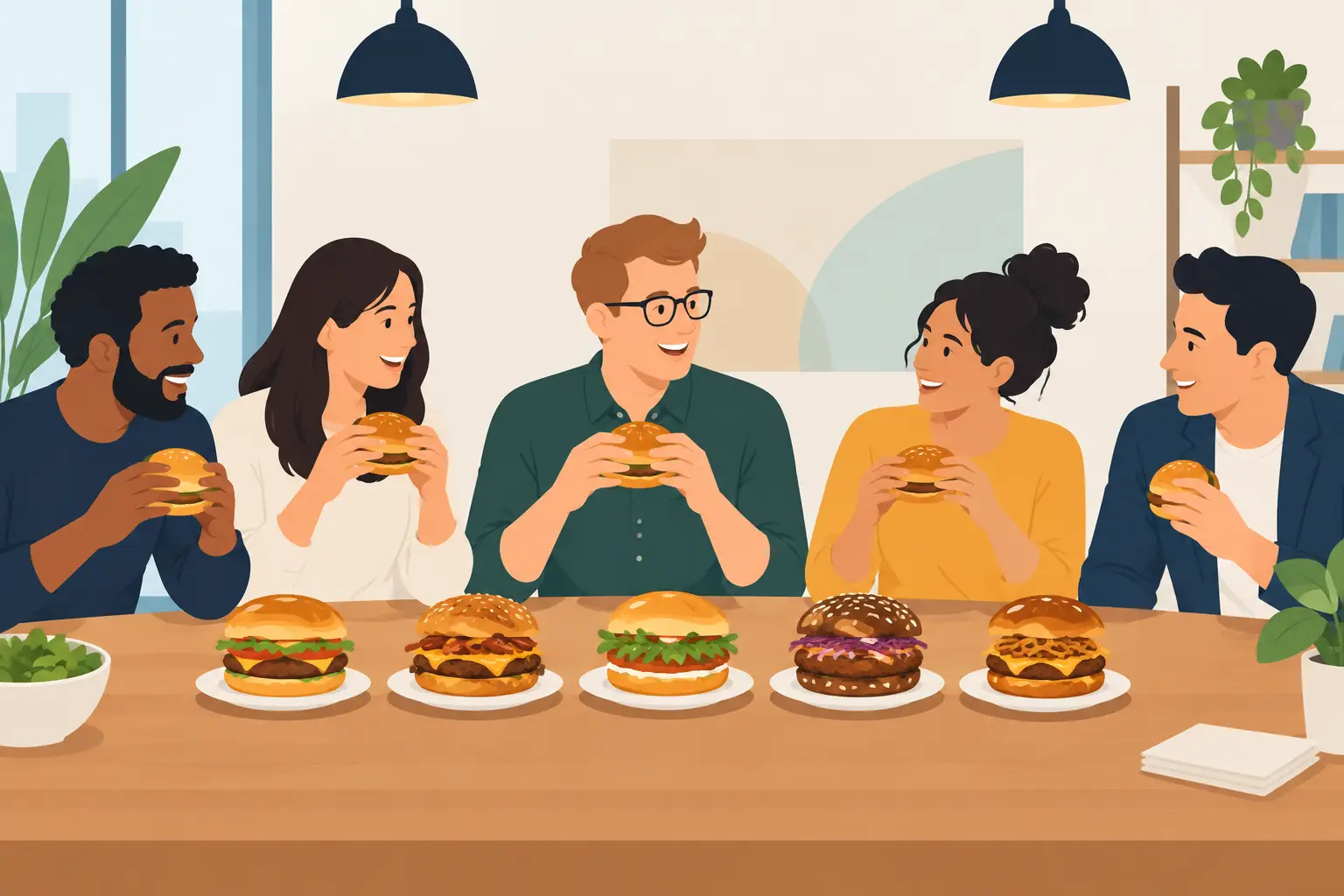
Your group chat has survived the “where should we eat?” debate. Now give it a better mission: finding the burger that earns bragging rights. A burger tasting turns a regular hang into a full-on flavor showdown, with crisp edges, melty cheese, big opinions, and probably someone defending pickles like it is a constitutional right. If you are figuring out how to host a burger tasting, the secret is not making 12 massive burgers and hoping for the best. It is serving small, intentional samples that let every bite have a moment.
How to Host a Burger Tasting Without Overdoing It
Start by deciding what you want people to compare. A great tasting has a point of view. Maybe it is a battle of classic cheeseburgers, a lineup of regional styles, or a mix of familiar favorites and one wild-card burger with enough heat to wake up the table.
For most groups, three to five burgers is the sweet spot. Fewer than three can feel more like lunch with extra steps. More than five gets expensive, crowded, and hard to judge once everyone is full. If you are feeding six to eight people, plan on each guest tasting roughly one-third to one-half of a burger per variety. That means sliders, quartered burgers, or cut-up full-size burgers all work beautifully.
Keep the tasting focused with a simple theme. You could compare smash burgers against thicker pub-style patties, test which cheese reigns supreme, or let toppings take center stage. A “classic versus chaos” lineup is always a crowd-pleaser: one straightforward cheeseburger, one bacon-heavy option, one spicy burger, and one creative flavor bomb.
The goal is not to prove that one burger style is objectively better. It is to get everyone talking about what they actually crave. Some people want a salty, griddled crust. Others want juicy, messy, stacked-high greatness. Both are right. That is the fun.
Build a Lineup With Real Contrast
A tasting falls flat when every burger has the same beef, cheese, sauce, and personality. Give each entry a clear reason to be on the table. Think about contrast in texture, richness, heat, and tang.
A reliable four-burger lineup might include a classic American cheeseburger with lettuce, tomato, and pickles; a smoky bacon burger with barbecue sauce or onion jam; a spicy burger with pepper jack, jalapeños, or hot sauce; and a vegetarian or chicken option with enough flavor to compete, not just fill a dietary checkbox.
If you are making burgers yourself, keep the patty size consistent. Two-ounce slider patties are easy to cook, easy to sample, and less likely to put guests into an immediate food coma. Season simply with salt and pepper when comparing beef quality or cooking style. Save the bigger seasoning blends for burgers where the toppings are part of the story.
Ordering is also completely fair game. In fact, it is often the smarter move when you would rather hang out than spend the whole night standing over a hot skillet. Choose burgers with distinct flavor profiles, ask for sauces on the side when possible, and cut each burger into equal portions right before serving. For a group event, catering can make the logistics much less chaotic while keeping the table loaded with crowd-pleasing choices.
Do not forget the bun
Buns are not background players. A soft potato bun, buttery brioche, sesame seed bun, or toasted pretzel bun can completely change the experience. Toasting helps a bun hold up against juices and sauces, but an overly crisp bun can steal attention from the patty. Match the bun to the burger instead of treating every build the same.
Set Up the Tasting Like a Tiny Burger Bar
Label every burger before people take a bite. This sounds obvious, but once the cutting board is covered in melted cheese, everybody suddenly forgets which one had the chipotle mayo. Use small cards, numbered baskets, or a handwritten menu on a piece of paper.
Serve samples in a planned order, from lighter and simpler to richer, smokier, or spicier. Starting with the hottest burger can bulldoze everyone’s taste buds before the classic burger gets a fair shot. If two choices are especially similar, serve them side by side so guests can compare them directly.
Keep sides supportive, not competitive. Fries, onion rings, wings, pickles, and a few sauces are perfect. A mountain of loaded nachos, however, may turn your tasting into a game of “who can still move?” Plain fries are especially useful because they give people a savory reset between bites. Shakes are a top-tier finish, but consider serving them after the scoring if you want guests to stay focused on the burgers.
Drinks matter, too. Sparkling water, soda, lemonade, beer for guests of legal drinking age, or a tart iced tea can cut through rich flavors. Put water on the table from the start, especially if a spicy burger is in the lineup. Milkshakes are delicious. They are not a reliable rescue plan after someone takes a bite of habanero sauce.
Give Everyone a Scorecard, Then Let the Debates Begin
You do not need culinary-school vocabulary to judge a burger. In fact, the best scorecards are quick enough that people will use them. Ask guests to rate each sample from one to five on flavor, patty, toppings, bun, and overall craveability.
Craveability is the category that settles the real question: would you order this burger again? A technically perfect burger can still lose to the one that makes someone say, “Wait, can I have another piece?”
Leave room for one short note under each burger. Guests might write “best sauce,” “needs more crunch,” or “absolutely demolished by the pickles.” Those notes make the winner announcement more fun and help you remember what worked for next time.
If your crew is competitive, add playful awards beyond first place. Best Late-Night Burger. Messiest in a Good Way. Best First Bite. Most Likely to Need Extra Napkins. This keeps a lower-scoring burger from feeling like a failure. Every burger gets its moment.
Make Room for Every Kind of Eater
A burger tasting should not make anyone feel like they showed up to watch other people have fun. Ask about dietary needs before you shop or place an order. Offer a vegetarian patty, grilled chicken, or a lettuce-wrapped option when needed. Keep plant-based items on separate utensils and trays if cross-contact is a concern.
For heat, make the spicy burger optional and label it clearly. For allergies, do not guess about ingredients. Check sauces, buns, cheese, and seasoning blends, since those are often where surprises live. A little planning lets everyone eat confidently and keeps the night about flavor, not damage control.
Timing helps, too. Cook or collect burgers as close to serving time as possible, then cut and plate them quickly. Burgers sitting around too long lose their edge, their warmth, and their structural integrity. You are hosting a tasting, not an archaeological dig.
End on a High Note
Once the votes are in, reveal the winner and give it the kind of ridiculous ceremony it deserves. Crown it with a paper napkin. Make the winner pick the next group dinner. Take a photo of the lineup before it disappears.
The best burger tastings are not about finding a universal champion. They are about giving your people a reason to gather, try something new, and argue passionately over cheese, sauce, and the proper amount of pickle. Keep the portions small, the flavors big, and the napkins within reach. That is a night worth repeating.