
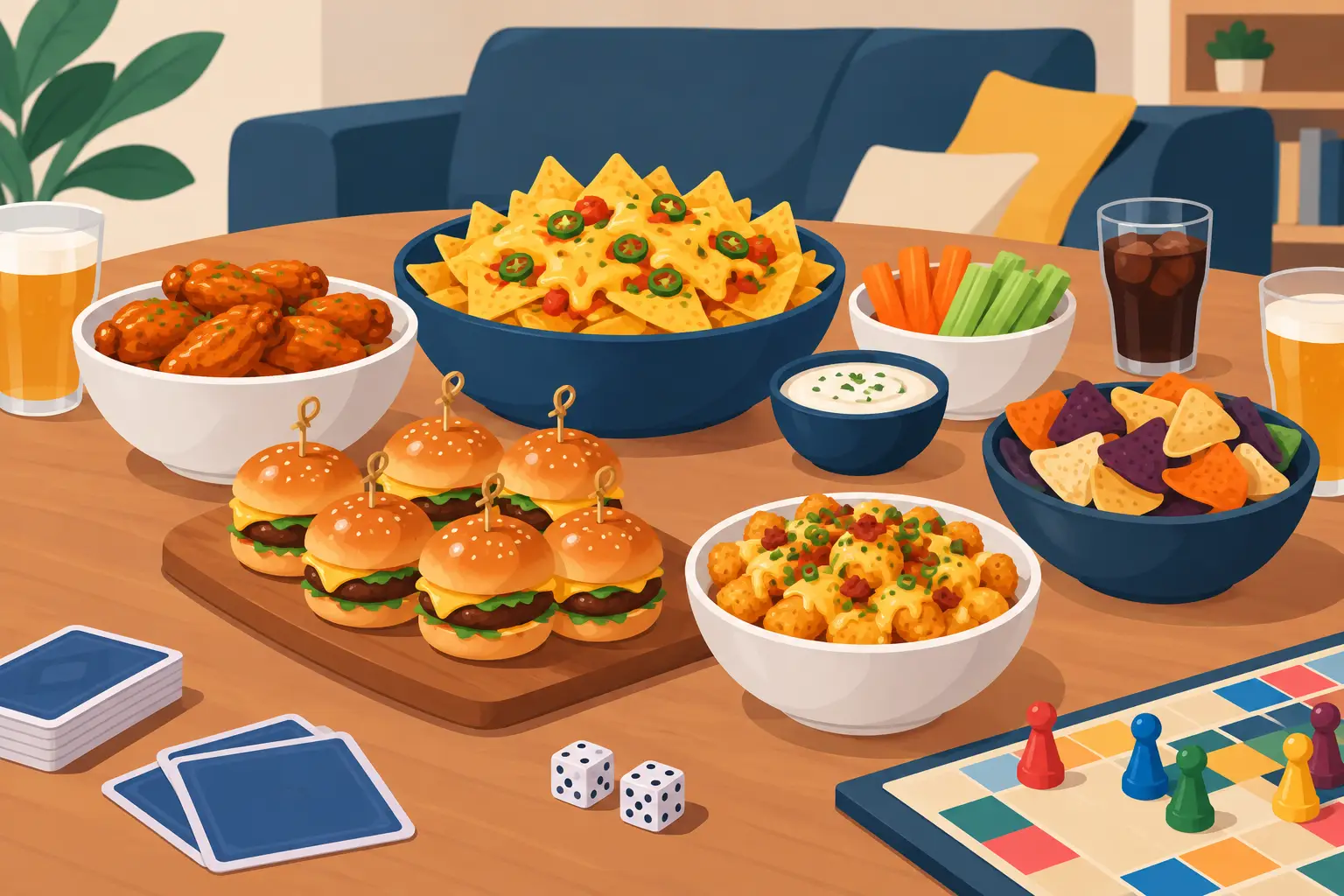
The score is tied, someone just called a questionable play, and nobody wants to miss the replay because they are stuck rebuilding a plate with a fork and knife. That is the real standard for shareable food for game night: it has to taste big, travel well from table to couch, and keep the crew fed without turning the host into the unpaid kitchen staff.
A great game-night spread is not about making every snack look perfect. It is about putting out food people actually want to reach for between plays, with enough variety to keep the spicy-food friend, the burger loyalist, and the person who showed up “just for one bite” happy. Build around familiar favorites, bring the flavor, and make the setup easy to refill.
What Makes Shareable Food for Game Night Work
The best game-night food is designed for one-handed eating. Think wings with napkins nearby, sliders that do not collapse on contact, fries that can handle a dip, and crunchy sides that still have some life after the first quarter. If guests need a seating chart, silverware, or a ten-minute tutorial to eat it, save it for a dinner party.
Portioning matters, too. Individual meals may sound simple, but a spread of shared favorites creates the energy people want on game night. Guests can try a little of everything, go back for their favorite, and build a plate that matches their appetite. It also keeps the room moving instead of making everyone disappear into a separate takeout container.
Temperature is the trade-off. Hot, crispy food is always the MVP, but not every item stays at its peak for two hours. Put your crispest items out in smaller rounds, replenish as the game goes on, and choose a few dishes that are still delicious at room temperature. That mix buys the host a little breathing room.
Start With the Crowd-Pleasers
Every strong spread needs a few no-brainer choices. These are the foods that disappear first, earn zero complaints, and make a mixed group feel like somebody planned ahead.
Wings Bring the Main-Event Energy
Wings are built for sports. They are bold, messy in the right way, and easy to order in more than one flavor so nobody has to pretend they like extra heat. Go with a range: one familiar savory option, one spicy choice, and one sauce-free or lightly seasoned batch for guests who prefer less heat.
The key is not serving every wing in one giant mountain. Divide them between two or three platters so people are not crowding one end of the table. Set out wet wipes or plenty of napkins, plus a separate bowl for bones. That tiny bit of organization keeps the vibe fun instead of sticky.
Sliders Keep Everyone in the Game
A full gourmet burger is a beautiful thing, but sliders are game-night gold. They are easy to grab, filling without being a full sit-down meal, and simple to customize across the group. A mix of classic cheeseburger sliders, a spicy option, and a meat-free choice gives people real options without making the menu feel complicated.
Keep toppings practical. Crispy onions, pickles, cheese, and a flavorful sauce bring plenty of personality. Overstuffed sliders can become a two-handed operation, which is less ideal when someone is holding a drink, arguing about fantasy stats, or celebrating a clutch play.
Fries Need a Dip Strategy
Fries do not need much help getting invited, but sauces turn them into a shared experience. Offer two or three choices with different personalities: something creamy, something smoky, and something with a little heat. If you are feeding a large group, order or make more fries than your instincts tell you to. They vanish fast, especially once the first basket hits the table.
Tater tots, loaded fries, and seasoned wedges can work just as well. It depends on how long food will sit before serving. Thin fries are amazing straight out of the kitchen but lose their edge quickly, while heartier potatoes tend to hold up better over a longer watch party.
Add Crunch, Color, and a Little Balance
Game night does not have to mean an all-beige table. A few fresh, crunchy additions make rich food more fun to eat and give guests a reset between wings and sliders.
A platter with crisp veggies, pickles, peppers, and dip is an easy win. So is a simple chopped salad served in small bowls or cups. These are not consolation snacks. The acidity and crunch make the whole spread taste better, especially when there are cheesy, saucy, and fried favorites in the lineup.
For a casual crowd, chips and dip are still doing exactly what they were born to do. Just choose a dip with enough flavor to compete with the rest of the table. A mellow dip can get lost next to hot wings and loaded fries. Bring in salsa, queso, a punchy ranch-style dip, or a creamy jalapeño option and let the snack table have some volume.
Plan Quantities Without Overthinking It
You do not need to turn game night into a math exam, but you do need enough food. As a general rule, guests eat more when the game overlaps with lunch or dinner, when drinks are involved, or when the matchup is worth yelling about. For a main meal watch party, plan for sliders or burgers plus wings and at least two sides. For a later gathering, more snack-style portions may be enough.
Build the order around the number of guests who will actually eat, then add a little cushion. The friend who says, “I already ate,” may still have three wings and a handful of fries by halftime. If your group includes students, hungry families, or people coming straight from work, make that cushion more generous.
Dietary needs deserve a quick check before you order. One vegetarian tray, a clearly mild option, and sauces served separately can make a huge difference. The goal is not to create a custom menu for every person. It is to make sure nobody is left staring at a table of food they cannot enjoy.
Make the Setup Easy on the Host
Set the food near the action, but not so close that a spilled drink takes out the entire spread. A side table or kitchen island works well when it lets guests grab food without blocking the screen. Put plates, napkins, and utensils at the beginning of the line, then food, then sauces. Drinks belong in a separate zone if you can manage it.
Label the spicy items. Seriously. “Red sauce” is not enough information when a guest has a low heat tolerance and a high level of confidence. A small note that says mild, hot, or extra hot prevents unnecessary drama and lets everybody choose their own adventure.
If you are ordering for a crowd, timing is everything. Place the order early enough that food arrives before the pregame chatter turns into kickoff. For bigger groups, catering-style packaging can take pressure off the host and make refills easier. LOL Burger Bar is a natural fit when your crew wants burgers, wings, fries, and shakes with enough personality to match the room.
Do Not Forget the Sweet Finish
Dessert does not need to be formal. Cookies, brownie bites, mini shakes, or a tray of something easy to grab keeps the momentum going after the last big play. Choose something that does not require plates if the table is already packed, and avoid desserts that melt into a major cleanup project unless you have a very committed crew.
The best game-night food gives people a reason to gather before the game starts and linger after it ends. Put out the wings, stack the sliders, keep the fries coming, and leave enough room for the kind of loud, happy chaos that makes the final score almost beside the point.